
JustPayMe on WhatsApp: running payment collections from a chat thread
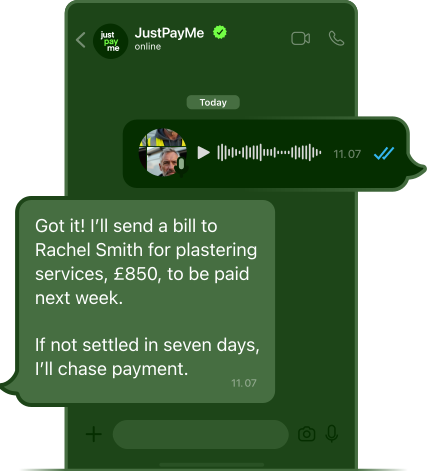
The owner sends a request by text or voice note. The assistant works out what is needed and drafts the action - a reminder, a chase, a note that a client has paid. The owner reviews and approves with one tap before anything reaches the client. The client is then reminded on their channel and can pay straight from the message. The same flow runs across WhatsApp, SMS, email, and Telegram.
The problem worth solving
Chasing an unpaid invoice is the job nobody wants. For a plumber, a tutor, a tradesperson - anyone running a small business on their own - it is awkward, it feels confrontational, and it competes directly with the work that actually pays. So it slips. A reminder that should go after seven days goes after thirty, or never goes at all, and the business carries the cost in its cash flow.
The cost is not just financial. An unpaid invoice is time stolen - the evening spent worrying about a conversation you have not had, the weekend admin that should have been life. And the avoidance is lose-lose: a well-timed, professionally worded reminder actually preserves the relationship and signals a professional business. The silence does not.
Both sides of this problem already live in WhatsApp. The owner uses it all day; so do the people who owe them money. Yet collections still happen outside it: a manual follow-up message, a separate app, a portal the client never logs into. The gap is not the channel. It is making the channel a place where money can actually be run.
What we built
The owner runs their collections from a single WhatsApp thread. They send a message or a voice note - 'chase the Henderson invoice', 'Rachel paid', 'pause reminders for John, he promised to pay', 'add a new client and chase him for £50' - and the assistant works out what they mean. It is menuless. No 'reply 1 to chase, 2 to add a client'. It holds context across the whole conversation, resolves references like 'he' and 'that one' to the right client, handles corrections mid-flow, and follows several instructions in a single message.
Before anything reaches a client, the assistant drafts the action and the owner approves with one tap. Nothing is sent without that approval. This is not just a safety mechanism - it is what removes the friction. A drafted reminder sitting in front of you is easy to send. A blank message is the thing people avoid.
When a client is chased, it comes from a separate professional sender number, kept distinct from the owner's own assistant line. The business always presents one calm, professional front. The tone is graded: friendly first, firmer only if needed, shifting with where the client actually is in the payment cycle rather than following a fixed calendar. The first message and the fifth are not the same.
Replies from clients are understood, not just received. When someone says they have paid, promises a date, queries the bill, or asks for a copy of the invoice, the assistant reads what they mean, drafts a fitting reply, and hands anything it is not certain about back to the owner rather than guessing. Clients can pay straight from the message - payment links and bank details are embedded - and the moment a bill is marked paid, the remaining scheduled reminders stop on their own. Nobody is chased for money they have already paid.
The same flows run over SMS, email, and Telegram for clients who are not on WhatsApp - where a channel cannot show tap-buttons, they become simple numbered replies. A weekly cash snapshot lands in the owner's WhatsApp: what is outstanding, overdue, and paid that week. For owners who use accounting software, the system syncs with Xero, Sage, QuickBooks, and FreshBooks, so it is always chasing real, current invoices.
Where the real work was
Sending a reminder is not the hard part. The hard part is making a messaging channel dependable enough to run money through.
That required real judgement at every layer. The conversation has to stay on track across the messy middle of a real exchange - corrections, 'I already told you', a client who disputes the amount mid-cycle, a promise to pay that doesn't materialise. The tone has to shift appropriately as a cycle progresses, not fire blindly on a schedule. The human gate has to sit exactly where the risk is, without adding so much friction that the owner stops using the system. And the production discipline has to be airtight: never send the same reminder twice, retry delivery sensibly, respect opt-in and STOP rules, stop the instant a payment lands.
The assistant was tuned against real conversations, not a demo script. Getting the channel right is the work. That is what JustPayMe actually is.
What it means for the business
The most dreaded admin comes off the owner's plate without them giving up control. Every action is approved before it goes out, so the owner is always the one making the call - the assistant just makes it easy.
Cash arrives sooner because the chase actually happens, consistently, on the channel people read. The client relationship is preserved because the nudge is professional and well-timed, not a resentful afterthought weeks late. And the owner gets time and headspace back - the kind that gets spent on the work, or on life.
How we can build this for you
JustPayMe is one instance of a pattern we use across client work. Find a real, repetitive, high-friction task that people avoid. Put an agent on the channel where that work already happens. Tie it to live data so it acts on facts. Keep a human approving the moments that matter. Build it to production standards, not demo standards.
We can build the same kind of WhatsApp or multi-channel agent for other businesses - collections, bookings, client support, internal ops. If you have a process that fits this shape, we are interested in the conversation.
“The owner runs their collections from a WhatsApp thread. Their clients pay from the same one. No new app, no portal - just the channel everyone was already in.”
Built with: WhatsApp Business messaging, voice-note transcription, AI intent and reply understanding, human-in-the-loop approvals, tone-graded reminders, pay-from-message, multi-channel delivery across SMS, email, and Telegram, accounting integrations (Xero, Sage, QuickBooks, FreshBooks).